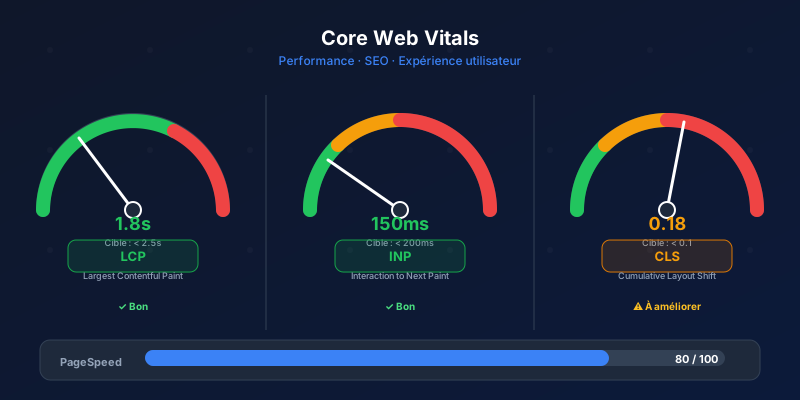
Since May 2021, Google has officially included Core Web Vitals as ranking factors in its algorithm. These three metrics measure the real user experience of your site — and they can make the difference between page one and page ten of search results.
The Three Pillars of Core Web Vitals
LCP — Largest Contentful Paint
LCP measures how long it takes for the largest visible element in the browser viewport to load (often a hero image or main heading). Google considers an LCP below 2.5 seconds to be “good.” Beyond 4 seconds, your site is in the red zone and rankings suffer directly.
INP — Interaction to Next Paint
Since March 2024, FID (First Input Delay) has been replaced by INP (Interaction to Next Paint), a more comprehensive metric that evaluates the delay between any user interaction (click, keystroke, tap) and the corresponding visual response. An INP below 200 ms is the target. Beyond 500 ms, the experience becomes frustrating.
CLS — Cumulative Layout Shift
CLS quantifies unexpected visual shifts during page loading. Have you ever clicked a button that jumped at the last second to land on the ad just below it? That’s CLS. A score below 0.1 is recommended.
Why These Metrics Impact Your Traffic
Google incorporates this data into its “Page Experience” signal. A fast, responsive, and visually stable site will be favored, all else being equal. But the impact goes beyond SEO: a Google study shows that improving LCP by 0.1 seconds can increase conversion rates by 10%.
Common Causes of Poor Metrics
- Unoptimized images: missing
width/heightattributes cause CLS; oversized images degrade LCP - Blocking JavaScript: synchronously loaded scripts delay rendering and increase INP
- Underpowered hosting: a high TTFB (Time to First Byte) mechanically drags LCP down
- Poorly managed web fonts: an inadequate
font-displayattribute causes reflows and increases CLS
How SiteCheck Measures Your Performance
SiteCheck directly integrates PageSpeed Insights API data into its full audits. In addition to LCP, INP and CLS scores, the audit analyzes TTFB, the presence of lazy-loading on images, resource compression, browser caching and CDN usage — around twenty performance checks in total.
Start by measuring so you know where to act first.